

Poached Eggs
Intimidated by the idea of poaching eggs? Don’t be! I’m going to show you my best tips for making perfect poached eggs quickly and easily in less than 10 minutes. Your brunch game will never be the same!
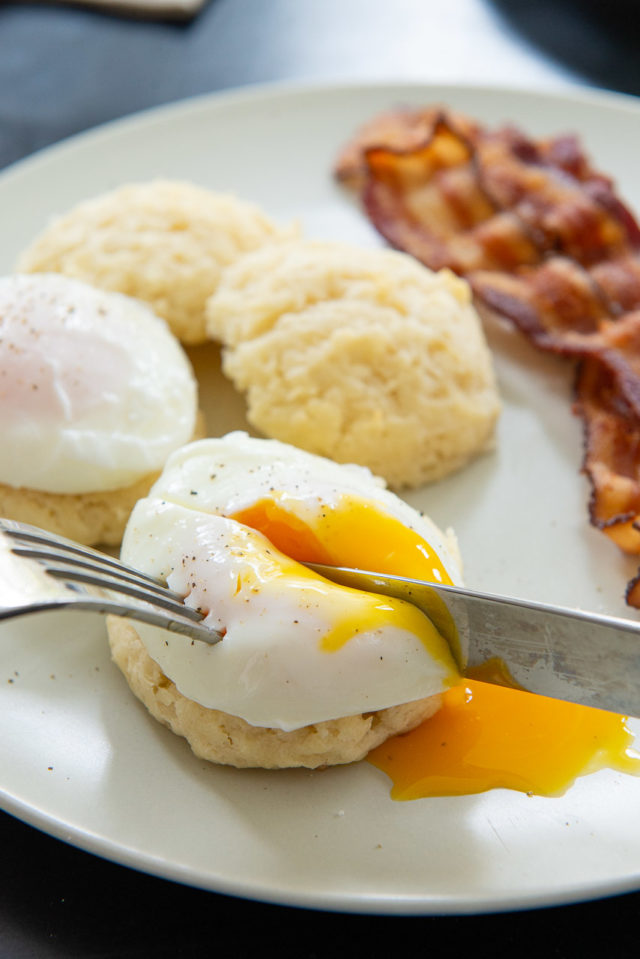
Seeing as my family goes through four dozen eggs per week, I’ve tested and repeated quite a few ways to cook them. From basted eggs to the perfect omelette, I’ve tried it all. But poached eggs are one of my very favorite preparations.
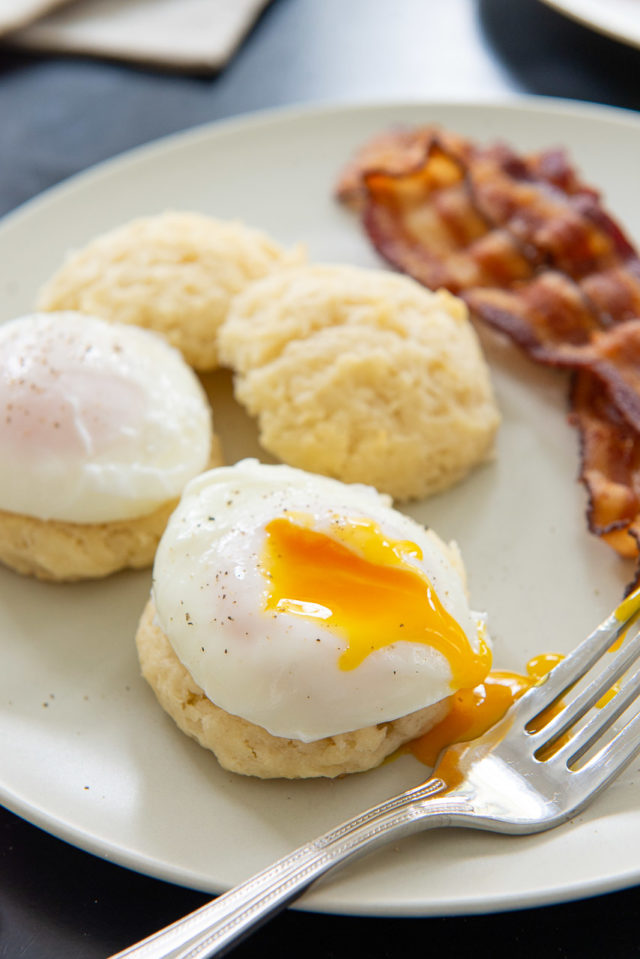
There’s something so appealing about a poached egg, with its warm runny yolk encased in gently cooked white. A lot of people think of poached eggs as more restaurant cooking than everyday cooking, but there’s no reason for that. Making them at home is simple!
I’ve seen a lot of different “hacks” that people share for making poached eggs. I’ve tested many of these over the past 10 years and honestly, a lot of these “hacks” don’t yield better results.
Instead, I’m going to show you my fool-proof method for making the perfect poached eggs every time.
Myth Busting: Things to Avoid When Poaching Eggs
I’ve tried all of the “hacks” for poaching eggs. Here are a few of the most popular ones and why I recommend not using them:
Add vinegar to the cooking water – In my experience, adding white vinegar makes the egg white coagulate strangely, no matter what amount I experiment with. Plus, you can taste it, even if it’s just a little vinegar. Don’t bother.
Strain the egg whites first – People say that swirling the cracked egg gently in a fine mesh strainer or sieve reduces whisps later on. I talk about this in depth below, but I prefer to deal with the egg white in a different way that is way less fussy.
Salt the water – I get the thought process behind this, but salting the water results in a rougher overall texture. It’s better to season to taste afterward.
Swirl the water into a vortex – Swirling water in the pot is totally unnecessary for getting a beautifully rounded egg, and in my experience, this whirlpool method will make your egg look like a raggedy shooting star.
Use an egg poaching tool – There are lots of uni-tasking egg poaching tools out there, but I don’t think they’re necessary. I’ll show you how to poach eggs the foolproof way using the pans you already have in your kitchen. Home cooks can easily master this simple method with a little practice!
Tips for Best Results
Now here’s what you should do to make the best poached eggs:
Use your freshest eggs – The newer the better. Fresh eggs are tighter and hold together better, with firm whites and yolks. The yolk in older eggs is always more likely to break.
Use a high-sided skillet or deep sauté pan (affiliate) instead of a saucepan – This gives you more space to gently drop the egg in, and the egg won’t plunk down as far.
Use plenty of water – Have you ever noticed that when you stick pasta in boiling water, it stops boiling for a minute, and then needs another minute to come back up to a boil? It’s the same concept here. A cold egg will cool the hot water too much if there isn’t enough of it. Fill the pot with at least a couple inches of water.
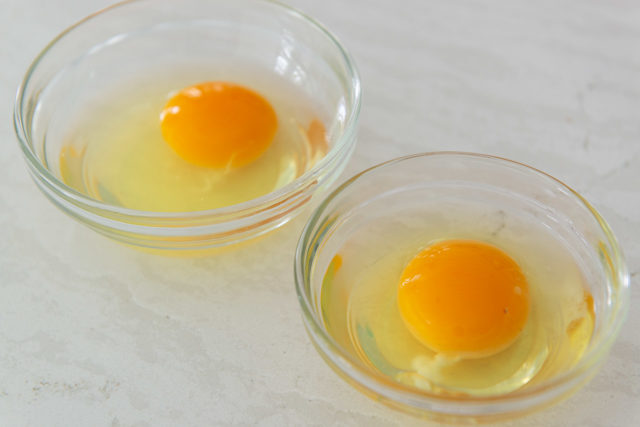
Crack the the eggs into ramekins, not directly into the water – I know it’s slightly annoying to dirty a couple bowls, but this is essential. Cracking the eggs into a small bowl first allows you to gently slip them into the water, giving them that rounded shape you want.
Also, cracking them into a bowl first ensures that the yolk is still intact. No point in poaching an egg if the yolk has already broken!
Bring the water to the perfect temperature with zero movement – You actually don’t want boiling water for poached eggs, because the bubbles will move the eggs around too much. I don’t even cook it at a gentle simmer either. Trust me here!
How to Poach Eggs (Step-by-Step Overview):
Here is a visual step-by-step guide of the process so you can understand how to easily poach eggs.
Crack each egg into its own small bowl or ramekin:
Fill a deep sauté pan or high-sided skillet with at least 2 inches of water. Bring the pan of water to a boil over high heat:
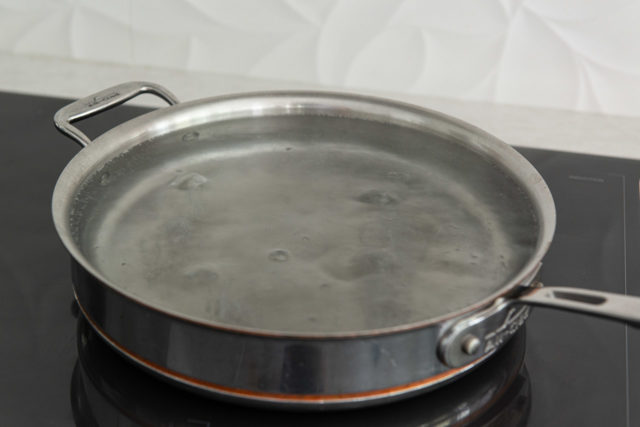
Then dial the temperature back and find the point where it’s just under a simmer:
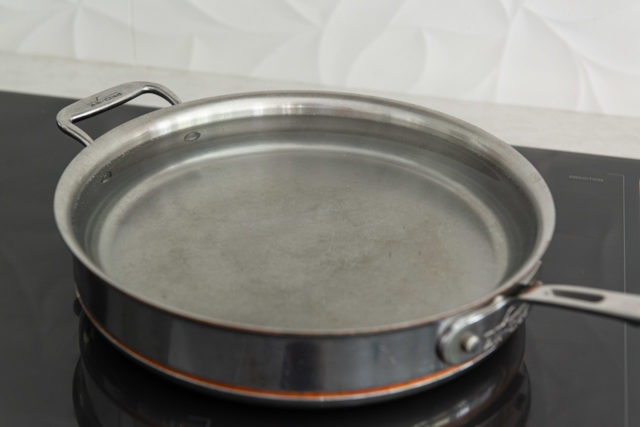
You can see there are no bubbles, but it’s still very hot. Even gently simmering water can sometimes have too much movement, and cooking at barely under a simmer still has sufficient heat for cooking.
Now very gently lower each egg into the water. Get the bowl as close to the surface of the water as possible — you don’t want to just plonk the egg in the water:
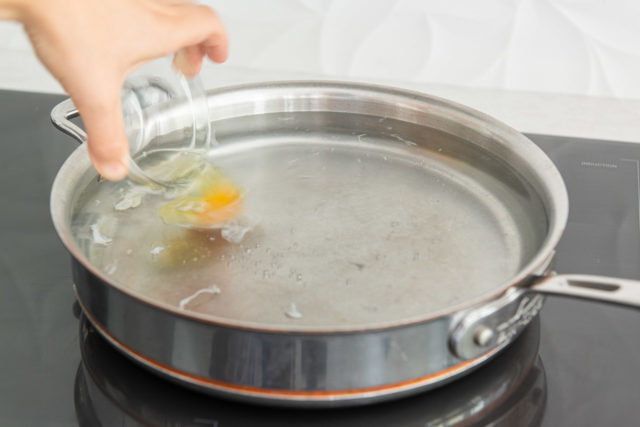
How Long to Poach an Egg
Cook the eggs for 3 minutes, completely undisturbed. At this cooking time, the egg white should be completely set, but the yolk will still be runny.
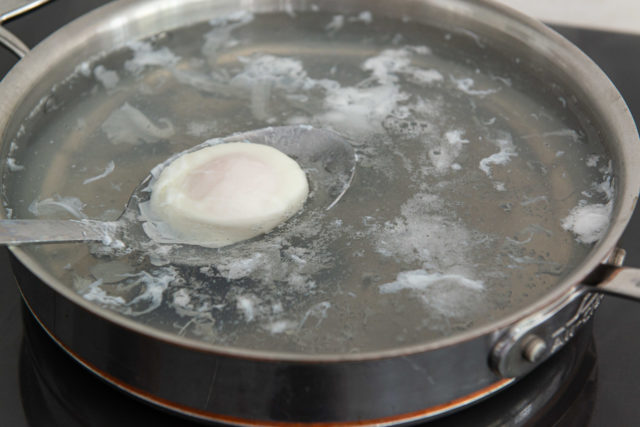
Remove the poached egg with a slotted spoon and transfer it to a paper towel-lined plate to absorb the excess water.
Trim the Whispy Egg White Threads
There will be whispy egg white threads, but they only take a few seconds to remove. If you look, you can see there are some thin parts below:
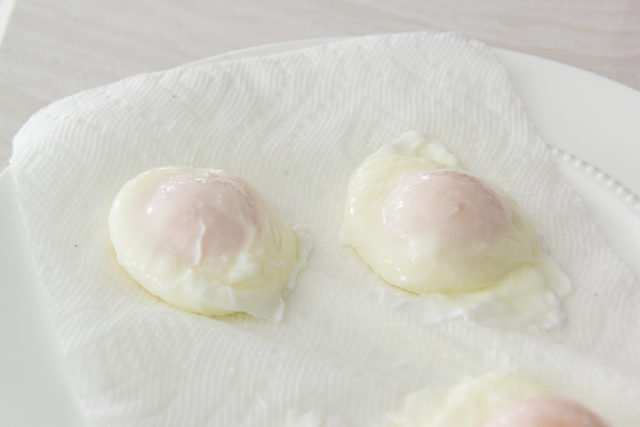
All you have to do is run a butter knife around the edges and trim these watery whites off:
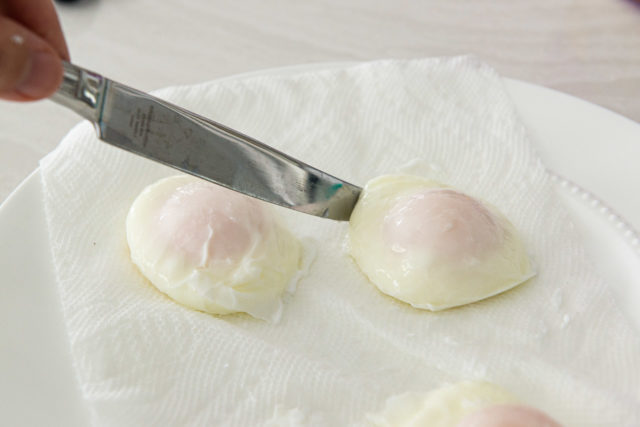
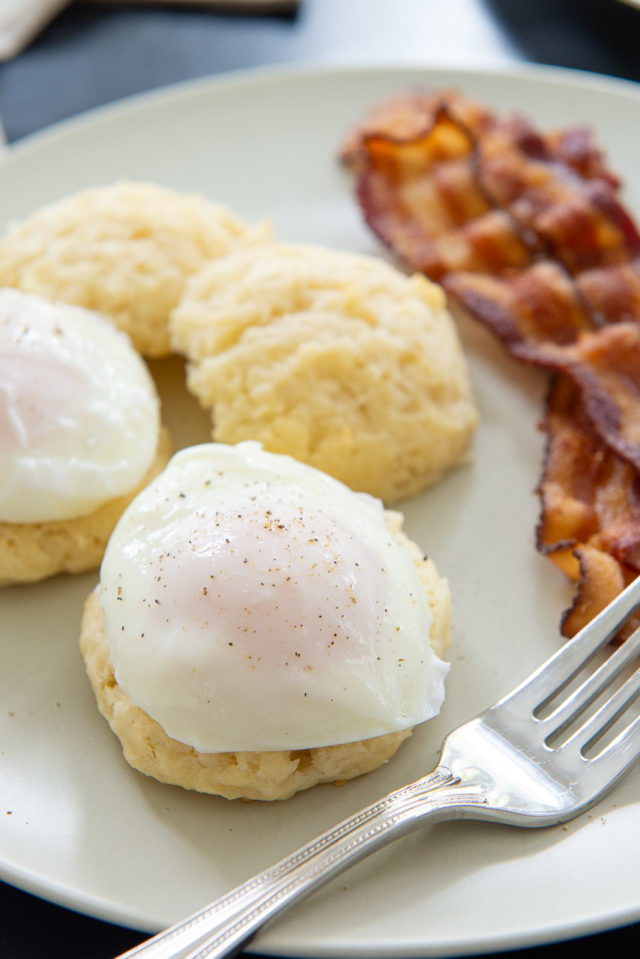
Once you’ve trimmed away any wispy whites around the side, serve right away, adding a little salt and pepper on top as desired. There is no need to submerge the egg into an ice bath or cold water.
Why Quick Trimming Is Better than Straining Beforehand
Some people recommend swirling the loose egg white in a fine mesh strainer before cooking in order to minimize whispy threads. I tried this and found it to be too much bother and fuss for something that can be easily trimmed up after cooking.
And, if you prefer pastured eggs like I do, they tend to have extra delicate yolks. You have to shift each egg around in the strainer pretty vigorously to remove the loose whites, and it can risk breaking the yolk.
How to Serve
After you’ve taken a quick few seconds to drain the egg on the paper towel and trim any egg white whisps as desired, serve the poached eggs immediately. You want to enjoy the runny egg yolks while they are warm.
Of course one of the most classic ways to enjoy poached eggs is as eggs Benedict. Try it with a homemade English muffin!
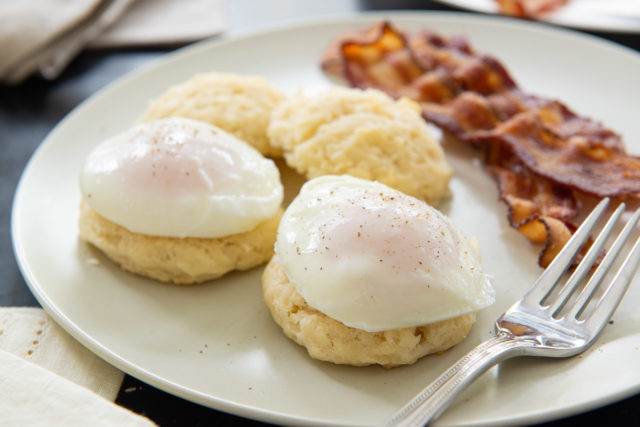
I also love adding them to avocado toast or a simple salad, throwing a couple on top of sweet potato hash, or enjoying a classic breakfast of eggs with hash browns, drop biscuits, and oven-booked bacon.
Frequently Asked Questions
It’s best to only make as much as you plan to eat. However, you can keep leftovers in the fridge for up to 2 days.
Not recommended. The texture will be horrid upon thawing.
No. I often poach eggs that are still cold from the refrigerator. There’s no need to bring your eggs to room temperature before poaching them.
I recommend cooking no more than 2 eggs at a time in a 10-inch skillet or 3 eggs at a time in a 12-inch skillet.
No. You can simply let them rest for a moment on a paper towel to drain away excess water, then serve them right away. Don’t forget to season them with salt and pepper as desired!
Tried this recipe? Leave a rating and comment below — I’d love to hear how it turned out! Or, follow me on Facebook, Instagram or Pinterest!
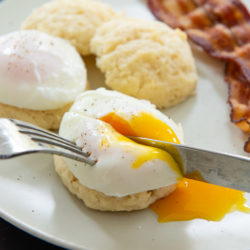
Perfect Poached Eggs
Ingredients
- 2 large eggs (use the freshest/newest you have)
Instructions
- Fill a large 10'" or 12" high-sided skillet or deep sauté pan with 2 inches of water, then bring to a boil over high heat. Reduce the heat to lower the water to just below a simmer. You don't want any movement or bubbles in the water.
- Carefully crack each egg into its own small bowl or ramekin.2 large eggs
- Gently lower each egg into the hot water, getting the bowl as close to the water as possible to minimize dropping of the egg.
- Cook the eggs for 3 minutes, then remove to a paper towel-lined plate using a slotted spoon.
- Serve immediately.
Notes
Nutrition
Nutrition is estimated using a food database and is only intended to be used as a guideline for informational purposes.
30 Comments on “Poached Eggs”
I love poached eggs! Your tips made it super easy to get the perfect texture. Thanks for sharing!
I just tried this poached egg recipe and it turned out great! The tips you provided made it so easy. I’ll definitely be using this method again. Thanks!
I never leave reviews but I have struggled with poached eggs for years and *I’m sold* on this method, thank you!!
This is so great to hear! Happy cooking!
Thanks that makes so much sense. I will give it a try. Always made them wrong water boiling etc. Thanks
Enjoy!