

Pork Carnitas Recipe (Authentic, Simple Method)
Carnitas are Mexican-style pork that’s slowly cooked until tender, then crisped in its own rendered fat. The goal is juicy meat with browned, crispy edges, perfect for tacos, burritos, and bowls.
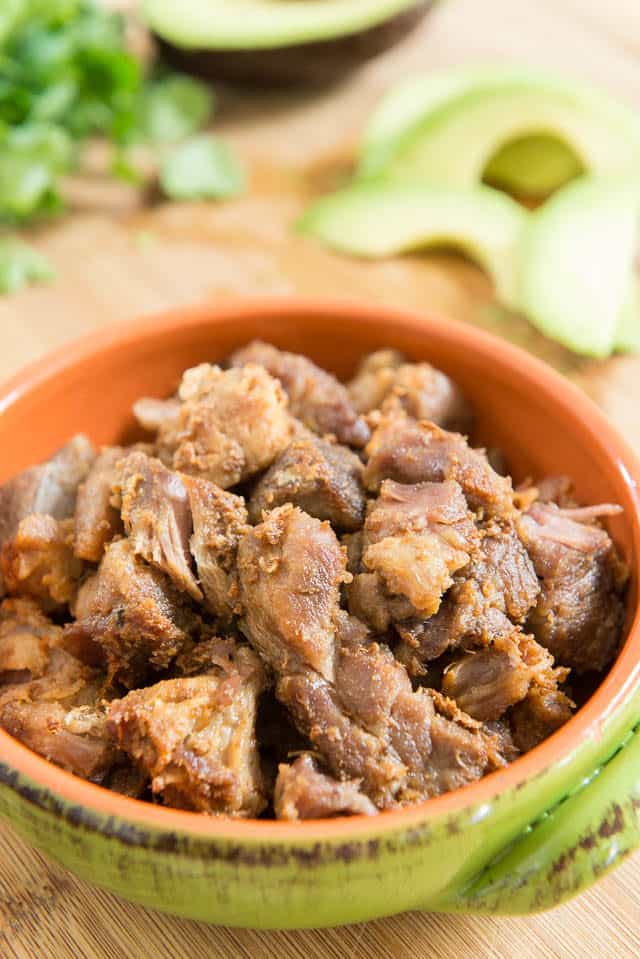
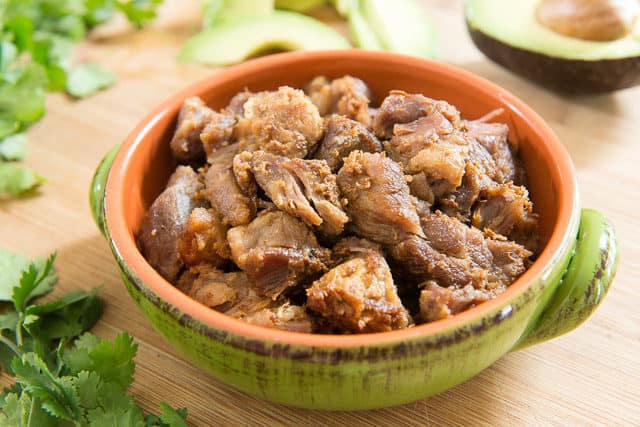
These carnitas are not made in the slow cooker, which is a good thing. My method gives you authentic crispy tender carnitas like the restaurants!
If you’re not familiar with carnitas, they are crispy, savory chunks of tender pork, and they are particularly great for filling tacos and burritos.
Tips for Best Results
Start with the right pork – For proper carnitas, you will need to buy pork shoulder, which is also known as pork butt or Boston butt. Don’t be afraid of a fatty cut, as the fat is what gives the rich flavor that you want in the dish. Do not attempt this with lean cuts like pork tenderloin or pork chops.
Equipment – This is not a good recipe for using a flimsy, cheap skillet, because the pork may burn in the bottom of the pan. Use a 12″ high-sided skillet or a 5-7 quart dutch oven.
Don’t discard any of the fat – When you’re ready to plate the carnitas and remove the meat from the pan, make sure to take the fat and drippings with you to the serving dish. That’s where all the best flavor is.
What Is Carnitas Meat:
PORK SHOULDER: This cut of meat that we’ll be using also goes by the name “pork butt” or “Boston butt” at the store. Even though it’s called pork butt, it actually comes from the shoulder of the pig. It’s the same cut of meat that you’d use to make pulled pork.
Bone-in or Boneless: You may purchase either a bone-in or boneless piece of meat, but the boneless piece may be easier to cut up if you’re not familiar with cutting around the bone.
Quality: Not all meats are created equal. Try to go for the best quality you can, ideally a pasture-raised pork with lots of fat and marbling.
How to Make Carnitas:
We do a 2 phase process:
The Simmer Phase – cooking the meat until the water has evaporated
The Crisping Phase – Finishing the meat in rendered fat until crispy and browned.
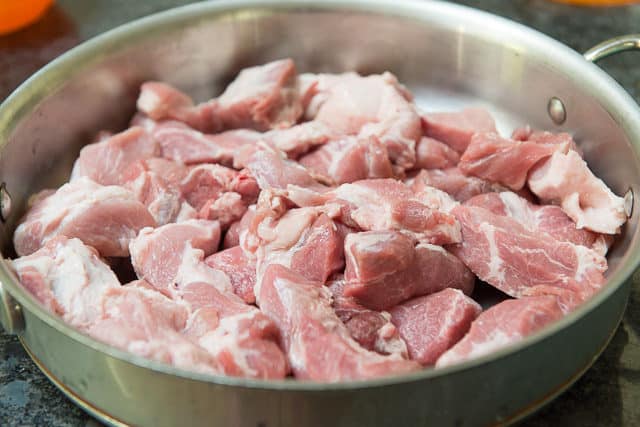
- Begin by cutting strips of pork shoulder 2 inches by 3/4 inch in size, and place them in a high-sided skillet or wide dutch oven:
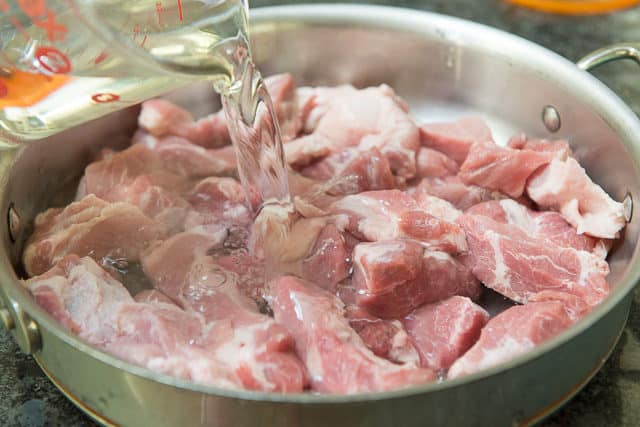
- Add enough cold water to cover the pieces of pork:
- Season the water with plenty of salt:
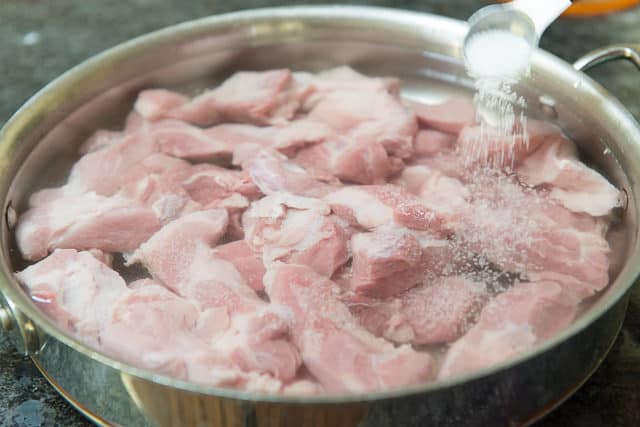
- Simmer the pork for about an hour and a half until the water eventually all cooks off.
*It will look a little unappetizing until the water cooks off, but stay the course. The slow cooking in the water helps with the rendering and eventual crispiness.
*As the water starts to cook off, beware that it will look like there’s more water than there actually is, because a fair amount of rendered fat will be left over in the pan. Make sure you don’t forget about the pan, and check it every 5-10 minutes.
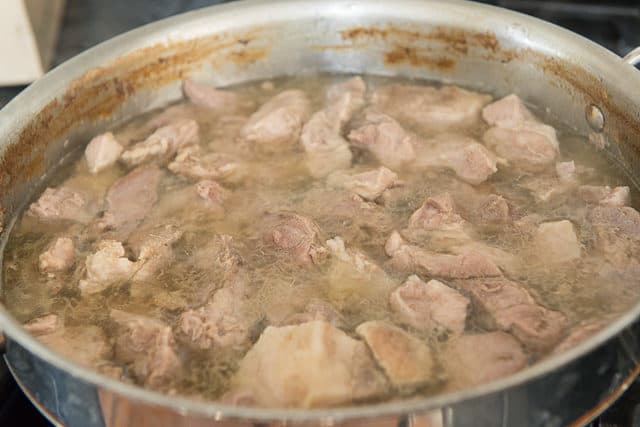
- Eventually when the cooking liquid is all gone and the rendered fat is left, the pork chunks will brown and crisp in their own rendered fat:
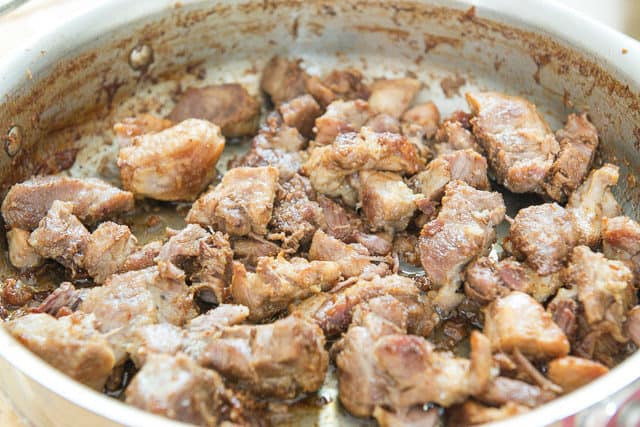
- Make sure to take your time at the end to thoroughly brown the pork in this fat. It develops the flavor significantly and also crisps up the fatty bits.

- Now there are the glorious “little meats” that this dish promises in its name. Enjoy!
How to Serve It
- I like to keep the carnitas in chunks but you can also shred it
- Scrape all the drippings and rendered fat from the pan into your serving dish. THIS IS FLAVOR
Street Tacos: Corn Tortillas, Onion, Cilantro
Burritos/Bowls: Rice, Beans, Sour Cream, Cheese. Think of Chipotle
What to Serve With the Carnitas, I like most typical Mexican food pairings,
Mexican Rice
Mexican Street Corn Salad
Jalapeno Tomato Salsa
pico de gallo
Guacamole
Recipe Tips and FAQ
Store in an airtight container in the fridge for up to 5 days.
Yes, the meat will freeze beautifully! Store in an airtight container in the freezer for up to 3 months. To thaw, leave in the refrigerator overnight.
For the easiest method, you may microwave portions in 30-second intervals until warmed through. However, the meat will not be as crispy. For the crispiest reheating method, re-fry the carnitas in a skillet over medium high heat for about 5 minutes, until warmed through. For the best results, add some extra lard (1 to 2 tbsp, depending on amount of meat) to the pan before heating.
Not really. You need the pork shoulder (aka boston butt) because it has fat that will render down and eventually fry the pork chunks. Pork loin and pork chops are pretty lean.
Perhaps, but it’s likely too much of a bother. The instant pot is likely too small for a typical pork shoulder, and you’d need to sauté for a while to cook off the water needed for browning.
Recipe Variations
Part of the benefit of cooking the pork with only salt is that you get to taste the nuances of the meat better. However, feel free to experiment with adding other flavors. Here are some ideas for next time:
Spices: Add any spices you wish here. Sazon Seasoning is wonderful, but you can try a simpler dry rub with chili powder, black pepper, garlic powder, onion powder, and so on.
Serving with Tortillas: Serve in flour tortillas or warm corn tortillas with your favorite fixings. Try sour cream, fresh cilantro, red onion, and a squeeze of lime.
Tried this recipe? Leave a rating and comment below — I’d love to hear how it turned out! Or, follow me on Facebook, Instagram or Pinterest!
Pork Carnitas Recipe
Ingredients
- 3 lbs boneless pork shoulder (aka boston butt)
- 1.5 tsp salt
Equipment
- High Sided Skillet or Dutch Oven
Instructions
- Cut the pork into strips approximately 2 inches by 3/4 inches in size (do not trim any of the fat off).
- Place the pork strips in a high-sided skillet, and add just enough cold water to barely cover the pork.
- Add the salt, then bring the liquid to a boil over high heat. Reduce the heat to bring the water back down to a simmer (medium low heat), and simmer until the water has evaporated, approximately 90 minutes.
- Reduce the heat more, somewhere between low and medium low, and keep cooking the pork for about another 30 minutes, turning the meat every 10 minutes or so, until the fat has rendered out, and the pork is browned all over.
- Serve and enjoy!
Notes
Nutrition
Nutrition is estimated using a food database and is only intended to be used as a guideline for informational purposes.
34 Comments on “Pork Carnitas Recipe (Authentic, Simple Method)”
This was surprisingly good for such a simple recipe I made about a pound of pork and it was perfect
Thanks Elisabeth! so glad you enjoyed this one
This is the simplest dish I have ever made. Is great. Make sure you make enough. Most of my family have gone to low carb so they eat these w/o tortillas. I have to figure 1/2 -3/4 lb per person.
So glad you guys liked them! and great tip!
Sounds great and tastey.
Sounds great!
Good recipe!
Wow! I thought this sounded too good to be true. Just water and salt? But I thought why not? I’ll give it a shot. I buy 9-10 lbs Boston butt roasts for $12 at most. I cut pork chops from it but there’s always a pound or two around the bone that can’t be cut neatly. So it usually ends up being breaded and turned into nuggets. But I’m tired and that sounded like too much work and I’m tired of the same old thing.
This is the perfect busy week night recipe! It really is as easy as it sounds. I added a can of mild rotel towards the end of the boiling time, but I fought the urge to add any extra seasoning. Best burritos I’ve ever had! Couldn’t stop munching out of the pan as they were cooking. Lol even without the rotel it would’ve been amazing. I just like my veggies. May add bell peppers and onions next time, we’ll see.
I bought several pounds pork shoulder ($12 for 8lbs )thinking to make korean recipe but seemed alot of work (double drenching…ugh) so googled recipes. Carnitas? I usually don’t like when get at local Mexican store, very dry. I’m Mexican so I know good carnitas. Ok this was very good, but even better, very easy. I used my medium duty stainless steel dutch oven and should have kept eye more closely as water boiling down, I would stir more at this point. Burned at bottom little but not scorched. I scraped bottom as didn’t want to waste, lol. My pan soaking now…🤭. Thank you, enjoyed mucho mucho!
I cooked fatty pieces in a 12″ cast iron skillet, but some of the meat became too dry, not juicy as other pieces. Newbie error, I’m sure. I see that your skillet is stainless, probably heavy duty too, is that correct? Do you think the kind of pan I use is vital in order to get juicy carnitas?
I’ll def try again!
Unless the carnitas were burning on the outside, I wouldn’t think the pan would affect that. Is it possible you had the heat too high/aggressive at points?
This is the best,best,best way to go!!!
I like the simplicity of this recipe, but cooking time is way under. 2 hours later and my water was no where near evaporated. I recommend planning for double the cooking time at least.
Hey I let the pork boil until it is partially cooked with saffron, masala, chili’s, garlic and onion, butter, salt.
I put a skillet with plenty oil, and chilis .
Let the pork cool off and slice the chunks into 3 pieces , throw them into the skillet.
Turn them after a minute on high heat. Add teriyaki sweet sauce in with the chili and pork . both sides of the meat look brown then heat a few minutes on medium heat, add to a bowl of rice. Mmm
My first time making carnitas and they came out so tender and juicy with a great crust! I made a pico de gallo with chopped avocado. Served it on corn tortillas. Awesome!