

Simple English Style Scones
These English Style Scones bake up light, soft, and fluffy, and are a wonderful treat for breakfast or afternoon tea. Spread them with jam, clotted cream, butter, or simply eat them plain. They’re incredibly delicious and are made in 25 minutes. No chilling required!
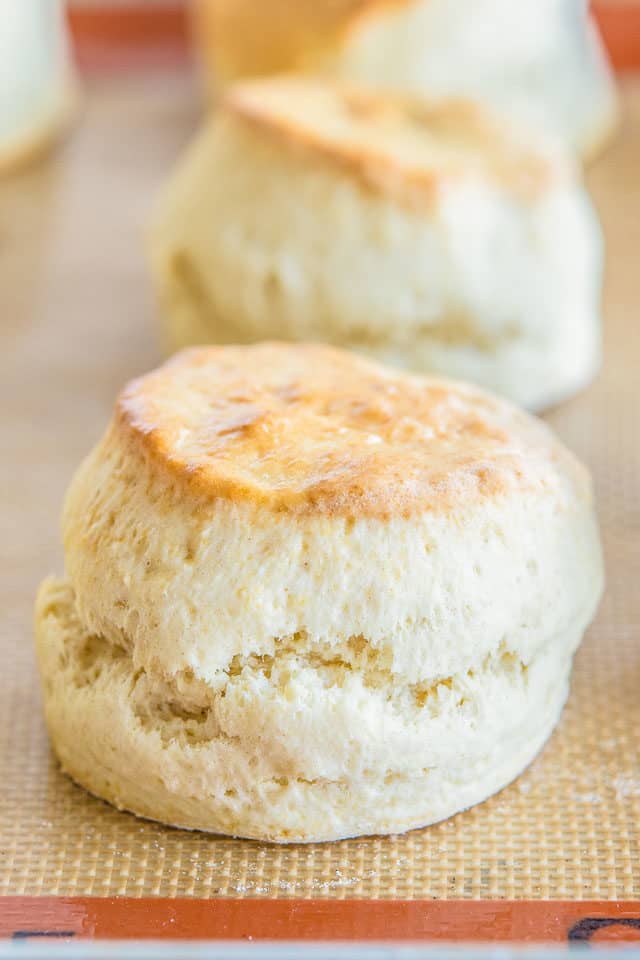
English style scones are wonderfully light, soft, and fluffy, and this recipe uses a simple no chill method with softened butter to create that signature tender texture. Made with flour, butter, milk, and eggs, the dough comes together quickly in the food processor and bakes into warm, pillow soft scones that are ready in about twenty five minutes.
I grew up eating incredible scones from a beloved Bay Area bakery called Sconehenge, and I spent years trying to recreate that perfectly soft texture after moving away. Nothing ever came close until a trip to England, where I tasted an English style scone and finally understood what made those childhood scones so special. After years of practice, this recipe is now my go too and same with hundreds of my readers that say this is the best scone recipe they have ever made!
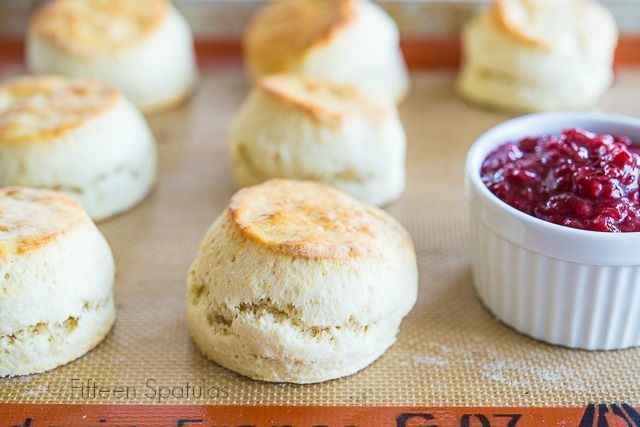
English scones are made differently from American scones, and instead of being stiff and dry, they’re fluffy and soft. A lot of people think these look like American biscuits, and they kind of do, but they’re prepared quite differently.
Best Practices for Baking Scones
Work quickly, and resist the urge to add excess flour – I paired these two tips together, because they really go hand in hand. You’ll want to have all your ingredients ready to go so that you can carry the recipe out quickly, because the butter will only get warmer and the dough stickier if you take too long.
Push the cutter straight down – When you go to cut your circles of scone dough, make sure to push the cutter straight down. Do not twist the cutter. This will ensure the scones rise as high as possible.
Use the best quality butter – It’s incredible how different brands make wildly different tasting butters. Some don’t taste like much of anything, while others have incredibly rich flavor, that slightly sweet dairy fat flavor all humans love. My favorite butter is Kerrygold. Plugra and Vermont Creamery also make great butter. If you look up butter taste tests online, you’ll see that they are definitely not all equal.
Use fresh baking powder – Baking powder is what helps these scones rise, so if your baking powder has been sitting for more than 6 months, it likely has lost its full effectiveness! New and fresh baking powder is going to give you best results.
Ingredients for Big Fluffy Scones
All Purpose Flour – Creates the perfect dough
Baking Powder – Makes the scones rise (Use fresh!)
Salt – Balances flavor perfectly
Sugar – Adds slight sweetness you look for in a scone
Softened Butter – Softened butter turns the flour into a sandy texture dough we need
Whole Milk – Perfect fat content for moisture and holds everything together
Egg – Adds structure for a fluffy scone
How to Make Perfect Scones: A step by step guide
- To get started, combine all-purpose flour, salt, baking powder, and sugar in a food processor, then add softened butter:
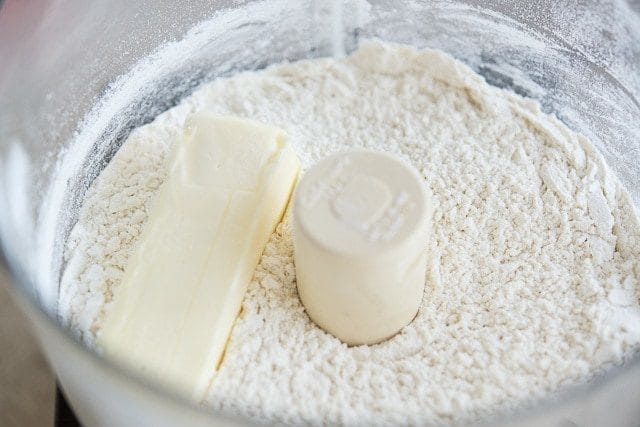
- Pulse the food processor ingredients until the softened butter is well incorporated into the flour.
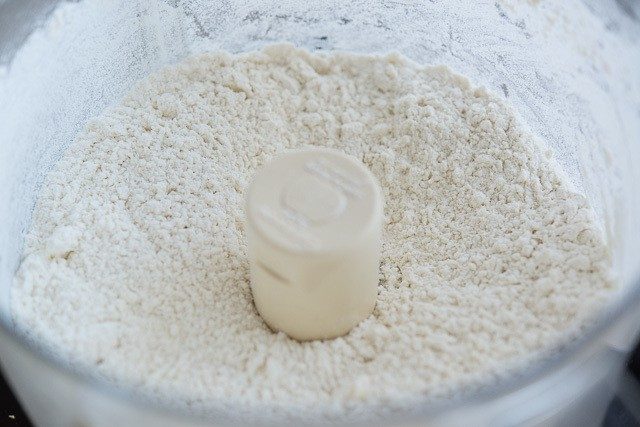
Note: if you are using a pastry cutter, you’ll need to work it through til is has this sandy texture
You can see that unlike a pie crust, we don’t have big pieces of butter in the flour. Rather, it has a sandy, soft texture:
- Dump this mixture into a large bowl.
- In a seperate bowl whisk together your milk and an egg, saving 2 TBSP of this egg wash in a small bowl for later.
- Add the rest of your milk and egg mixture into your flour mixture
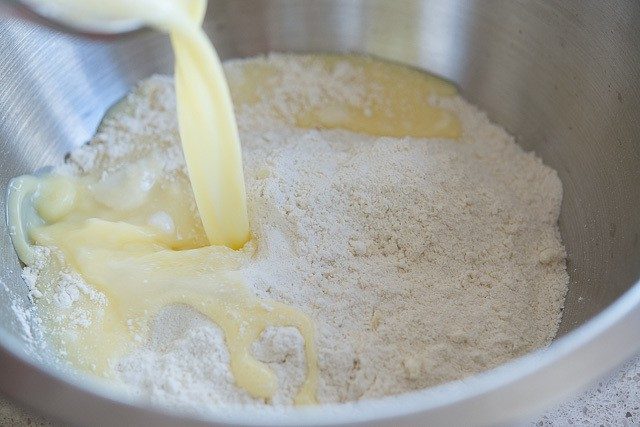
- Stir together with a spatula, then when it’s roughly combined, dump it onto a lightly floured surface:
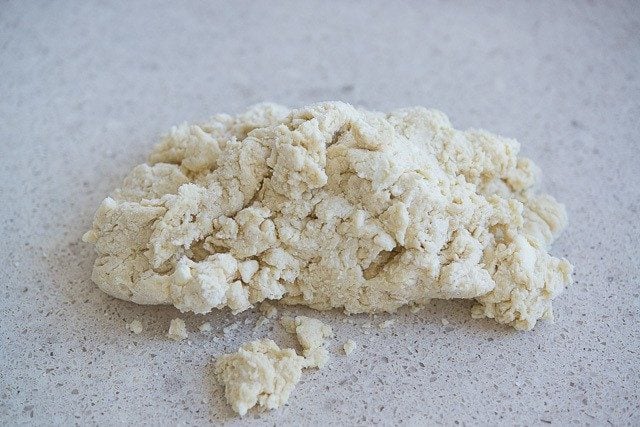
- Lightly flour the dough, then knead it until it smooths out a bit, just a few times:
Note: this mixture will be wet. Resist the urge to add too much excess flour, this will make your english scones drier.
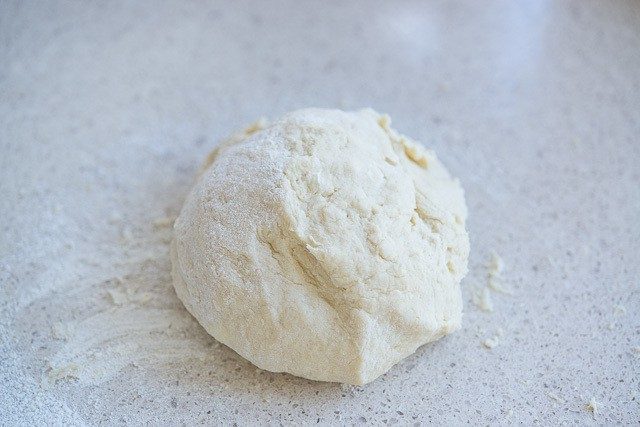
You can see that it’s still sticky, and there are bits sticking to my counter. Again, this is important for a hydrated dough, a soft texture, and good rise. As with anything where you combine flour with liquid, try not to knead too much, or excess gluten will develop and make the scones tough, and also prevent them from rising as high.
- Roll the dough about an inch thick:
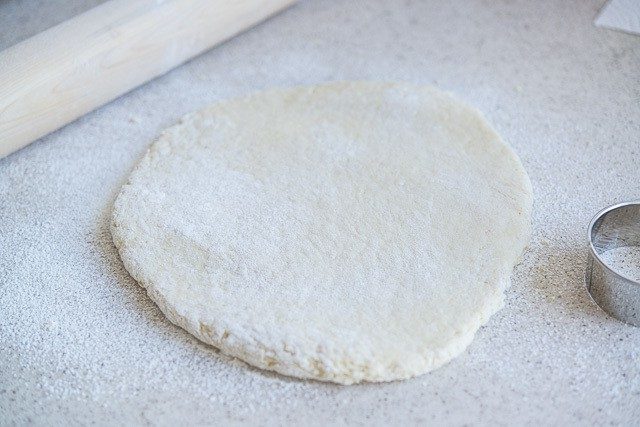
- Use a 2.5″ cutter to cut circles, or, use a sharp knife to cut square pieces. Then place them on a silicone mat or parchment paper lined baking sheet.
Note: Make sure not to twist the cutter at all when cutting the circles. Push straight down toward your work surface, otherwise they won’t rise as tall.
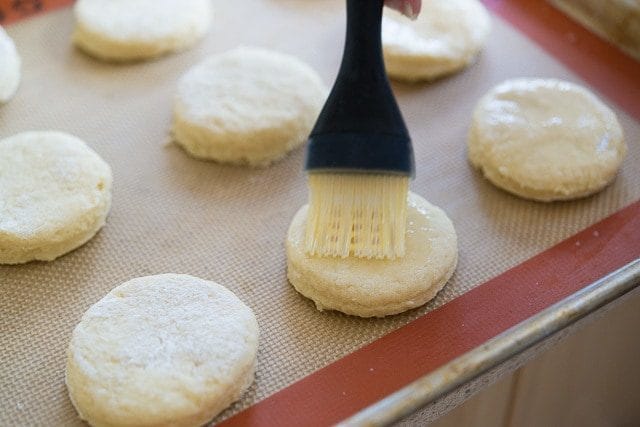
- Before baking, brush each scone circle with the reserved egg milk wash:
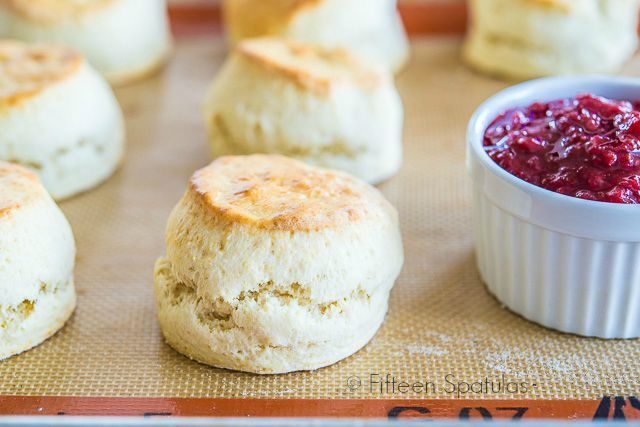
- Bake 13-15 Minutes at 425°F until lightly golden on top
How to Serve Scones
Serve the scones while they’re warm with your favorite jam (I love this strawberry jam) and clotted heavy cream for extra bonus points. My grocery store sells this in the fancy cheese section. Butter is of course lovely too, especially Homemade Orange Honey Butter.
You can certainly enjoy these after they’ve cooled as well, but like many baked goods, they are always at their peak when they’re fresh and warm out of the oven. I love these for Mother’s day, baby showers, and weekend brunches.
For your next homemade baking projects, I also suggest these Homemade English Muffins, my favorite Banana Bread, and Pumpkin Muffins.
Flavor Additions and Substitutions
Here are a few easy ways to experiment with different flavor combinations. This is a great recipe for playing around with variations, and can be looked at as a master scone recipe of sorts.
Citrus zest: If you’d like to add orange zest or lemon zest, those additions work beautifully. Add up to 1 tablespoon of zest to the flour mixture.
Dried fruits: Add up to 1 cup of your favorite dried fruit after you’ve combined the wet and dry ingredients, but before all the flour has moistened. Blueberry scones made with dried blueberries are one of my favorites. Dried cherries are also wonderful.
Crunchy sugar: For an exterior crunch, sprinkle on a little sugar to the tops of each scone after brushing with egg wash. Turbinado sugar has great texture.
Chocolate chips: Add up to 1 cup of your favorite chocolate chips after you’ve combined the wet and dry ingredients, but before all the flour has moistened.
What about fresh fruit? This is possible, but I issue a caution. Add up to 1 cup, but know that fresh fruits are trickier because they tend to be wet, and this is already a fairly wet dough. Adding fresh fruit makes the scone dough more challenging to work with.
FAQ and Troubleshooting
At room temperature, for a few days. In the fridge, for a couple weeks. In the freezer, a few months. Because there are only simple ingredients here and no preservatives, the scones will mold if left out for more than a few days.
You can either freeze scones baked or unbaked. To freeze baked scones, let them cool to room temperature, then freeze in an airtight bag for up to 3 months. To freeze unbaked scones, make the recipe up to cutting the dough circles, then bake the circles straight from frozen for 5 extra minutes, or until cooked through.
Bake in a 300F oven for 5-10 minutes, until warmed through. You can also cut them in half and toast them. Add a few extra minutes if reheating from frozen.
Yes. Like any baked good, these are best fresh, but they’re still fantastic the next day. Reheat them per the instructions above, or bake from frozen (instructions are in the post).
As noted above, it’s normal for the dough to be a little bit sticky, but it should still be workable. If it’s not workable, this is probably either because there’s not enough flour, or the butter got too warm. So first, try to weigh the flour if possible. There is already so much variation between cup measuring and brands, and weighing the flour will help ensure proper proportions. Next, try to assess if the dough needs more flour, or if it’s too warm. For example, if the butter you used is softened above 70 degrees F (or if you used the microwave softening feature for a bit too long), the butter may be too warm by the time you’re working with it. Popping the dough into the fridge will firm the butter slightly, and may help you roll it out. Or, you can add just enough flour to the outside to roll it out, then cut the pieces.
First, make sure you’re using fresh baking powder, one that has been opened less than 6 months ago. Also, if you knead the dough too much, the scones won’t rise as tall. Knead gently, and just enough to bring the dough together. Adding more flour also prevents the dough from rising as high, so only dust lightly.
Tried this recipe? Leave a rating and comment below — I’d love to hear how it turned out! Or, follow me on Facebook, Instagram or Pinterest!
Here’s a video I made for the scones, follow along with me and ill show you all the details

English Style Scones Recipe
Ingredients
For the Scones:
- 2 cups all-purpose flour (10 ounces by weight)
- 4 tsp baking powder
- 1/2 tsp salt
- 1/4 cup sugar
- 6 tbsp unsalted butter at room temperature
- 2/3 cup whole milk
- 1 large egg
Instructions
- Preheat the oven to 425 degrees F.
- In a food processor, pulse the flour, baking powder, salt, and sugar a couple times to combine.
- Add the butter and pulse 7-10 times until the butter is completely distributed. You shouldn’t see any chunks of butter, and the mixture should have a sandy texture to it. Transfer to a large mixing bowl.
- In a small bowl, whisk to combine the milk and egg. Save 2 tbsp of it for the egg wash later, and pour the rest into the mixing bowl with the dry ingredients.
- Stir to combine with a spatula, until a rough dough forms.
- Transfer to a lightly floured countertop and knead about 10 times until the dough comes together into a relatively smooth ball. Take care not to knead too much, or the dough will be tougher and not rise as high.
- Roll the dough about an inch thick and use a 2.5″ cutter to cut about 7 circles. Re-roll the scraps and cut out another 2.
- Place the scones onto a parchment or silicone mat lined baking sheet and brush the tops with the reserved egg wash.
- Bake the scones for 13-15 minutes, until about tripled in height, and golden brown on the tops and bottoms. Enjoy!
Notes
Nutrition
Nutrition is estimated using a food database and is only intended to be used as a guideline for informational purposes.
624 Comments on “Simple English Style Scones”
This is an incredible recipe & so simple to follow! Flawless scones everytime. Thanks for sharing!!!!
So happy to hear that, Sandra!!
I just baked your scones again on an Aluminum tray after reading the link you sent me… turned out perfect! Thanks so much 🙂
YAY, that’s great!
These scones turned out amazing… apart from the bottoms burning? I placed them on the bottom rack on a baking tray with parchment paper… none the less I cut the bottoms off and they were delicious! I would love to get the bottom right as I’m married to an English man and we live in America so it’s hard to find delicious scones anywhere!
Thanks
Hi Kylie, read this post by my friend Tessa, where she bakes the same exact cookie dough on different pans and the differences in brown-ness on the bottom is HUGE! The type of pan you use and how the heat circulates in your oven can determine the bottom burning or not. We moved into a new house in July, and my new oven is prone to burn bottoms too (at least for regular sheet pans), so now I use air bake pans or I put a silicone mat down on a regular sheet pan. Here’s the link: https://www.handletheheat.com/best-baking-pans/
Thanks so much!
Hello, I’m really looking forward to making these but struggle with US/Canadian cups as measures. I’ve moved from the UK to France and really need to follow a recipe in imperial quantities…lbs, ozs and pints! Can you help me with a conversion for this recipe? I would be so grateful. Many thanks, Cath
Great recipe! Have been searching for a good and easy one. Thank you very much!
I followed this recipe to a T. I followed all the measurement exactly. But somehow my dough was incredibly moist. Like too moist to roll. I’m wondering what went wrong. Do you have any idea?
Hello!
I tried doing a half recipe but held back a lot on the egg (beat an egg and omitted over half) but it turned out more like a batter and was super wet. I think next time I’ll just have to try with less milk as well? They turned out DEEEEELICIOUS though!! Thank you for the recipe!
I just made these scones and they are AMAZING. Light, fluffy and taste like more.
Even delicous with just butter and they brought back childhood memories.
Hi Doug, I’m very happy to hear that!!
After reading the comments, I made a few adjustments. I changed the temperature to 415degrees (cooked for roughly 15 mins) and used only 1/2 a cup of milk instead of 2/3. They turned out perfectly except for the bottoms being too cooked (dark brown) which happens to me every time I make scones and I have no idea why.
Hi Dara, the darkness on the bottom might have to do with the pan you’re using. Are you baking on a silicone mat, parchment paper, or directly on a sheet pan?
Hope you don’t mind me commenting, but I was wondering what type of oven you are baking your scones in. If you have your scones too low in your oven then they will over cook on the bottom, equally if they are too high in the oven then the tops will get burnt. I live in Scotland and am a professional baker so thought your comment very interesting.
hi! I’m looking at making these for my daughters birthday tea party but I have a lot of other baking to do and i’m wondering if i can make these in advance and freeze them? if so whats the best way to thaw them? thanks!
Hi Allyse, bread in general freezes very well. All you’d need to do is let the scones cool to room temp, then freeze in an airtight container. Then just thaw them at room temperature.
I tried to make these today. I followed the recipe to the letter but the “dough” wasn’t doughy it was wet. I had to keep adding flour but there was no way I could’ve rolled them!, what did I do wrong, are your ingredients wrong?
Hi Kathy, I’m sorry to hear this did not go as planned for you. I’d love to help you out the best I can, as these scones are delicious and others have had success with them (I also make these fairly often). Did you make this in the food processor? Did it have a sandy, relatively dry texture to it at that point? In the comments one person said the first time they made the dough, it was wet, but the second time they used an unbleached flour and the dough was more manageable. I’m not sure how much it actually makes a difference but knowing the type might help, and also maybe hold back 1/4 of the liquid when you’re tossing the dry and wet together.
Hi Joanne, I was wondering if these were like biscuits and if so what is the difference between the two? 🙂
Hi Shirley, while they look similar, these scones are made with room temperature (soft) butter that is completely blitzed into the flour. Biscuits use cold (firm) cubed butter that is cut into the dough, which large pieces remaining for a flakey effect.
Hi joanne
Baked ur scone yesterday n its just melt in my mouth.. hands down this r the best scones we had.. been baking scone like forever but never add in egg.. n btw i just skipped food processor just mix em by hand still the results r super yummy.. tq ??..all the way from malaysia ?
That’s wonderful, Biha! Happy to hear!
I just came across your gorgeous scones on Pinterest this last night and got up this morning and made them for morning tea. What a smashing hit!! Tall and fluffy and all together beautiful! Perfect with a cuppa 🙂 thanks for the great recipe and also your video. Now I’m off to check out what other goodies are on your blog 🙂
YAY!!! Glad to hear it 🙂
Hi,just wondering how many grams does 6 tbsp of butter equal to? Thx:)
Sorry I meant how can I mix dry ingredients with butter to get the right consistency