

Easy Roasted Butternut Squash Soup
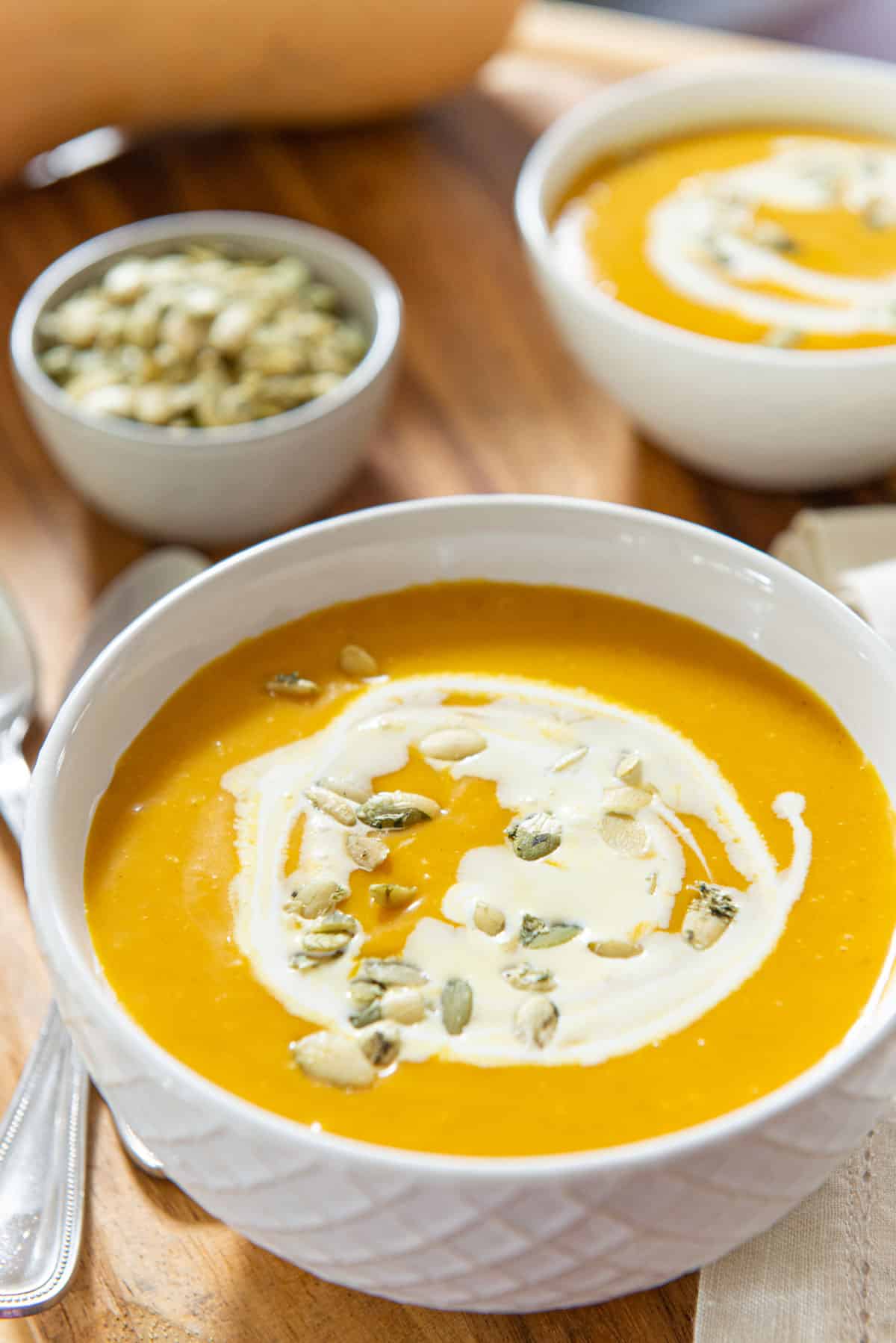
This is the absolute BEST Butternut Squash Soup! This easy recipe has the delicious, light sweetness of roasted butternut squash and a creamy texture without adding any dairy. Consider this the perfect way to enjoy your favorite winter squash.
Summer might be the reigning king of seasonal produce, but it would be a huge mistake to overlook winter squash.
Butternut squash is one of the most popular winter squashes and for good reason. It has a sweet, slightly nutty flavor similar to pumpkin and is great in both sweet and savory recipes.
This roasted butternut squash soup is one of the best ways to use it. Its also one of my top rated recipes! It tastes amazing and uses simple, good-for-you ingredients.
Table of contents
Why This Recipe Is The Best
Roasting = the biggest secret of all – For the best soup, we’ll be using Roasted Butternut Squash. Why? Because roasting caramelizes and intensifies the natural sweetness and flavor of the squash. Cutting the squash into cubes first maximizes the surface area for the most flavor. You just don’t get the same effect if you simmer the cubes in the broth.
Minimal ingredients but incredible flavor – All of the ingredients for this butternut squash soup are pantry staples, and they all add to the rich flavor of the recipe.
Incredibly creamy, without dairy – While you can add a drizzle of heavy cream or coconut cream on top to make it pretty, this soup is made without dairy but still has a luscious, creamy texture. Unlike some other soup recipes, just doesn’t need the dairy!
Intense flavor, and not watery – Roasting the squash first cooks out a lot of its water and intensifies the flavor.
No added sugar or sweetness – You’d be surprised how many butternut squash soup recipes and restaurant versions call for adding sugar. It’s an easy way to make things taste good, but totally unnecessary here. Instead, we make the most of the natural sweetness of the squash by roasting it.
Batch friendly – I like to make a double batch of roasted butternut squash. I use one batch as a side dish or in a salad and use the other for this soup. You can even keep the roasted squash in the freezer for turning into soup later on.
Pro Tips for the Best Butternut Squash Soup
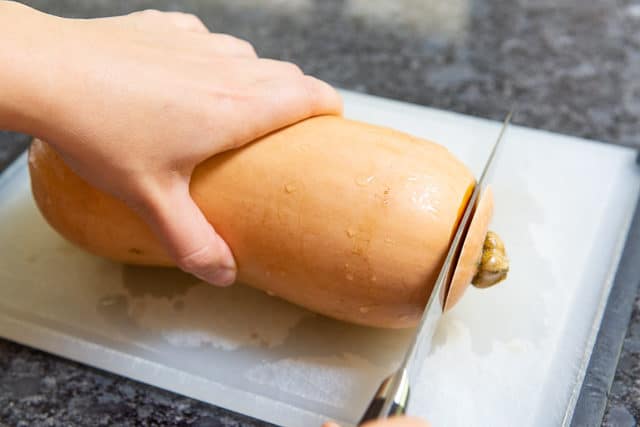
Pick a good butternut squash – Look for a whole squash that has a dark beige color and a very firm texture. If it’s starting to feel soft or if it has a lot of dings in it, pick a different one. You also want the stem to be firmly intact instead of fallen off. Ideally you want the heaviest squash for its size, which indicates more moisture inside.
Roast the squash in small pieces – I know you can roast the squash whole, but the downside of this is you don’t get as much caramelized surface area. That caramelization is what makes this creamy butternut squash soup taste so amazing! So take the time to cut those cubes so you maximize browning and flavor.
What you’ll need
You only need a handful of simple ingredients to make this easy butternut squash soup. All of these are pantry staples, so you may even have everything you need on hand already:
- Butternut squash: You’ll roast this before making the soup, so make sure to plan ahead. You can roast the squash up to 3 days before making the soup; store the roasted squash in an airtight container in the refrigerator. Check out my visual guide on how to cut butternut squash if you are feeling intimidated by how to do this!
- Butter or olive oil: Other fats, such as avocado oil or even coconut oil, will also work.
- Yellow onion: Shallots are a nice option for a slightly different flavor.
- Salt and pepper
- Ground cinnamon: A small amount of ground cinnamon adds the most unexpected flavor to this soup (without making it taste like dessert).
- Broth: I prefer chicken broth, but use vegetable broth for a vegan or vegetarian version. Chicken or vegetable stock will also work if that’s what you prefer.
If you’d like, you can garnish the soup with a drizzle of heavy cream or coconut cream and a sprinkle of toasted pumpkin seeds. Some homemade croutons would also be lovely!
The Difference Between Broth and Stock
Although many people use the terms broth and stock interchangeably, they are actually slightly different.
Broth is made by simmering meat in water and may or may not contain additional aromatics. Stock, on the other hand, is made by simmering bones and aromatic vegetables in water. This tends to give it a stronger flavor and richer mouthfeel than broth.
When making quick soups like this one where you’re not really simmering for long, it’s important to use a broth that has a lot of flavor to begin with. It’s what lets you get away with such a quick preparation that still tastes delicious.
How to Make Butternut Squash Soup (Step-by-Step Overview)
Soften the aromatics
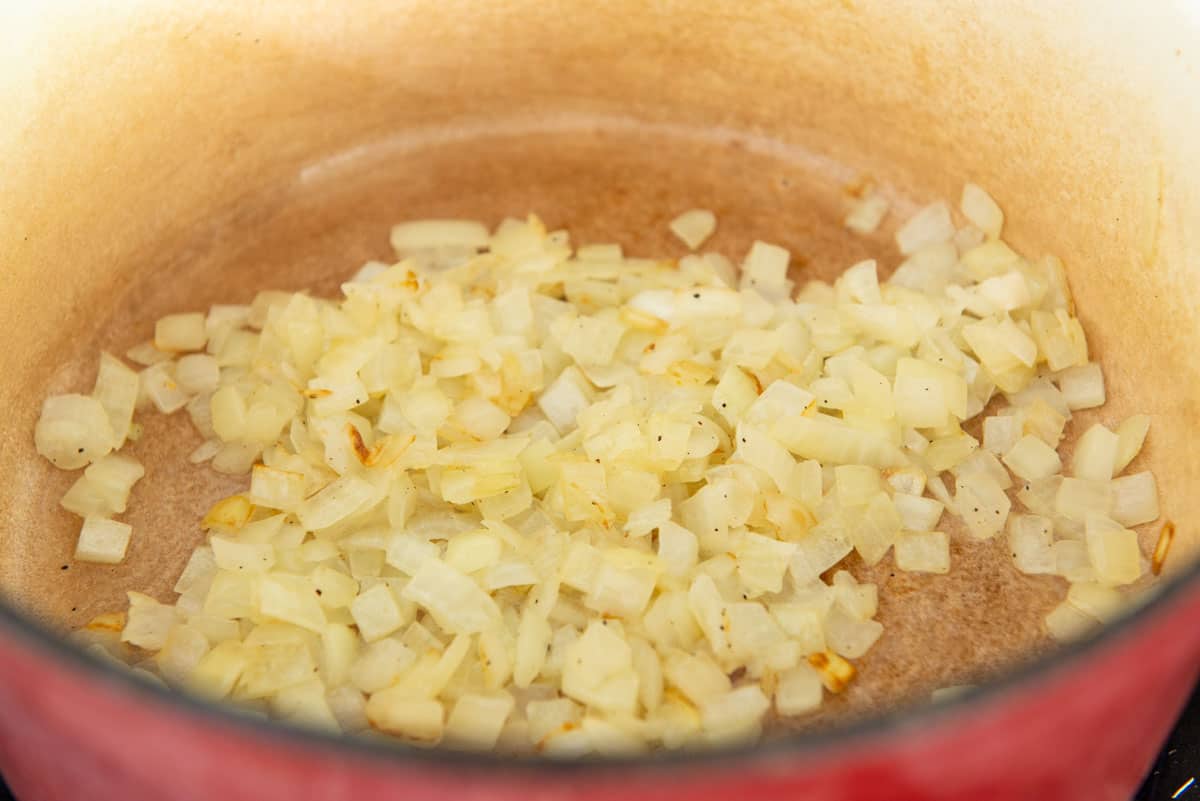
- In a large soup pot or dutch oven over medium heat, add the butter or oil, onion, salt, and pepper. Cook until the onion is soft; this will take about 10 minutes:
Add the roasted squash
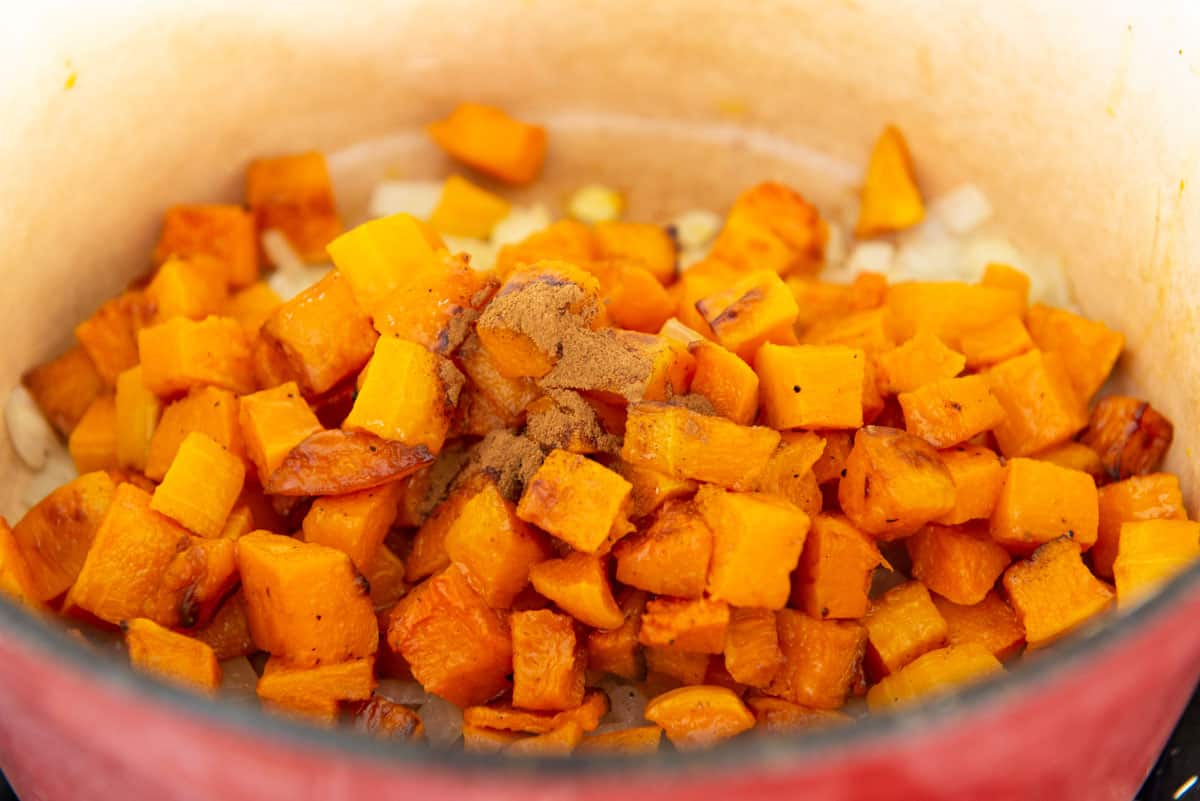
- Add the roasted squash cubes to the pot along with some ground cinnamon:
- Stir for a couple minutes until the cinnamon is fragrant. This really enhances the flavor and gives the dish a great autumnal feel.
Add the liquid
- Add either chicken broth or vegetable broth to the pot:
- Bring the soup to a boil and simmer for 2 minutes. You’re really just heating up the liquid since the vegetables are already cooked.
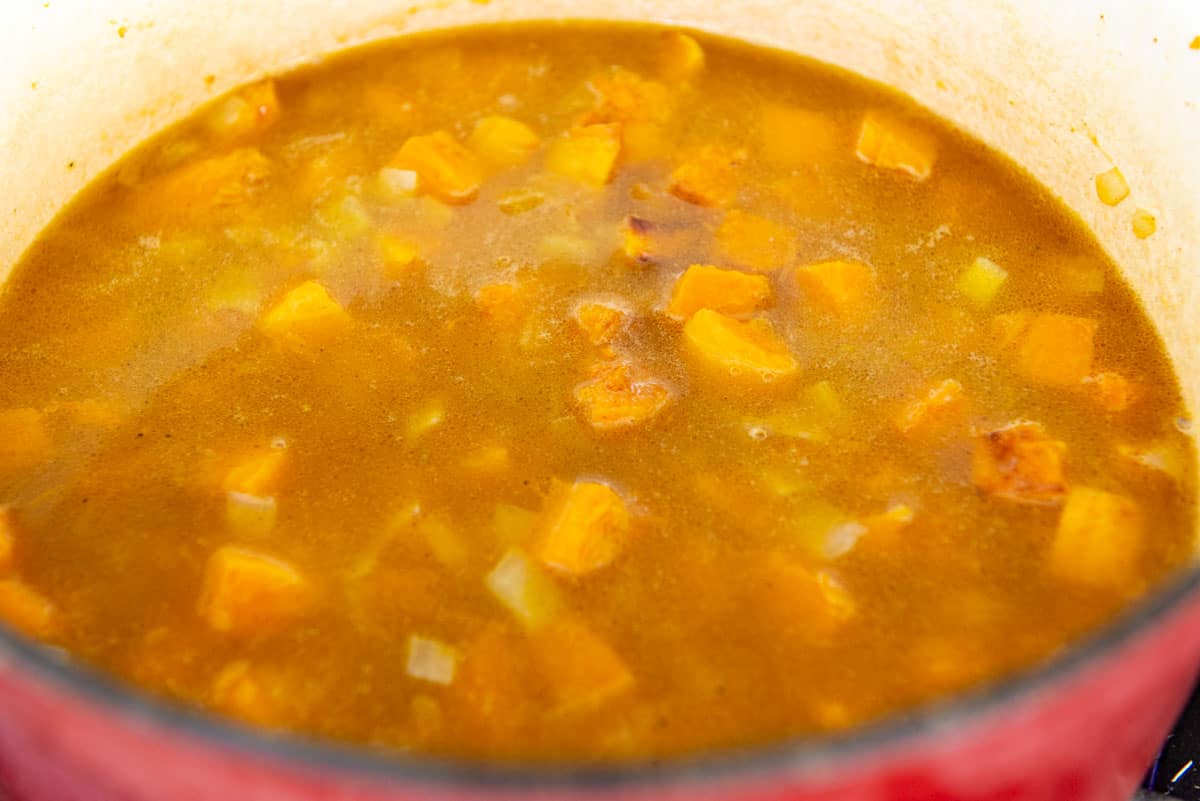
Puree until smooth
- In order to get a creamy soup with a silky smooth texture, you need to blend the soup thoroughly. You can either do this in the pot with an immersion blender (affiliate) (aka a stick blender), or let the soup cool slightly and blend in a regular blender:
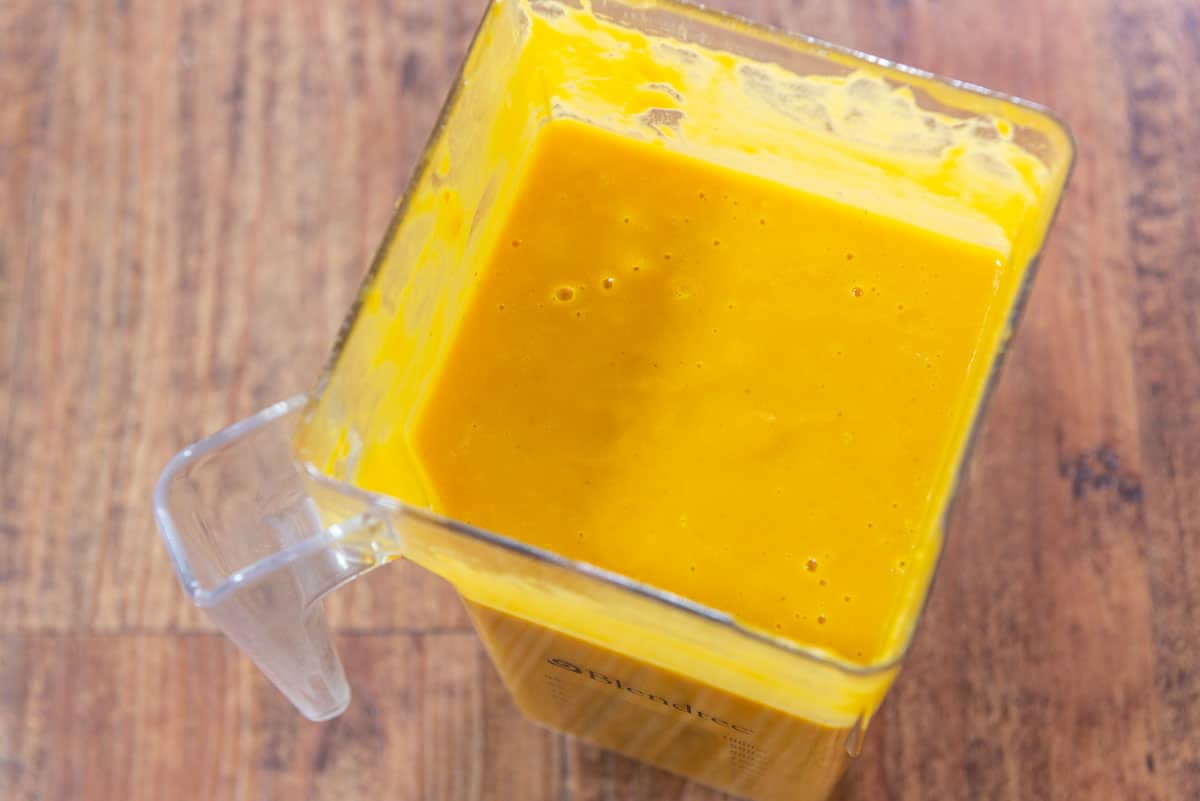
Why I like using the blender more: The blender is a little more annoying than the immersion blender, but I find it makes for a MUCH smoother soup and silkiest texture, so I prefer it. If you don’t have a blender at all, you can try using a food processor, but it won’t be as smooth. Be sure to follow your blender or food processor’s instructions for blending hot liquids, as there’s usually a maximum fill line for this.
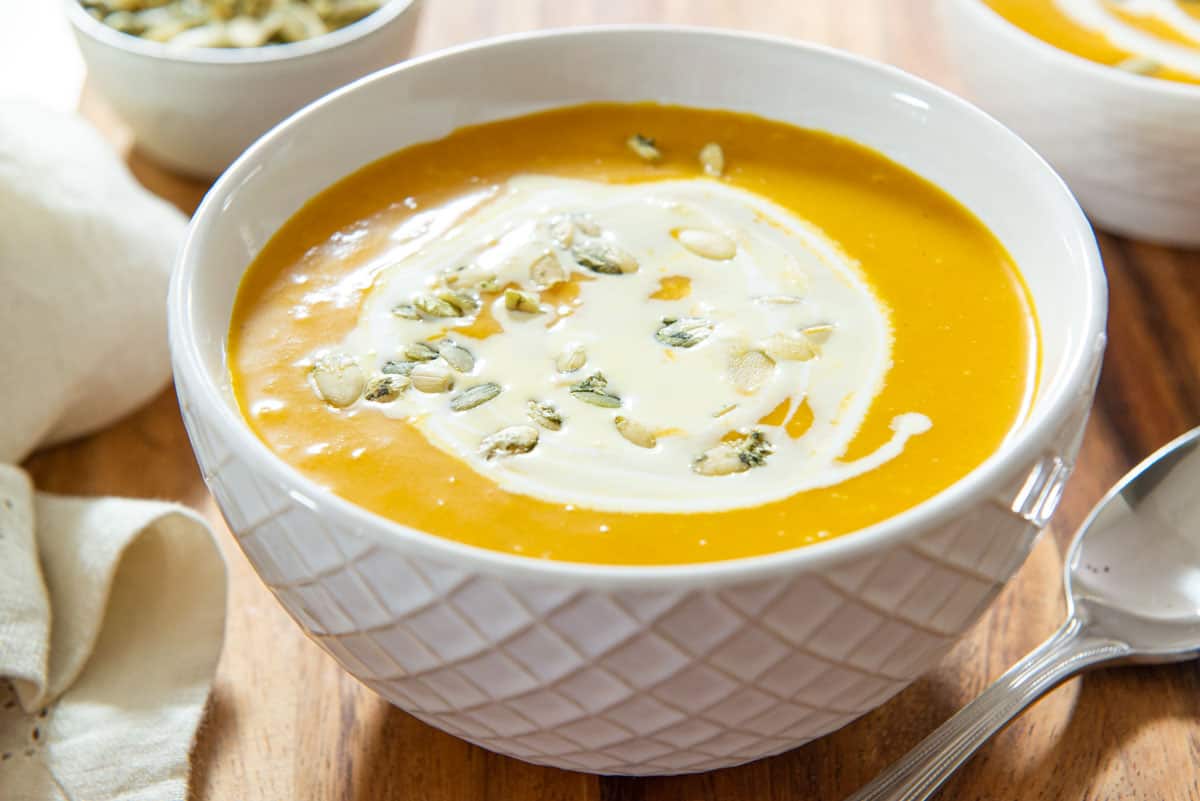
The butternut squash soup is now ready to serve. Usually it’s still hot enough to serve straight from the blender, but if not, simply pour the liquid back into the pot and heat on the stove for a couple minutes to warm it up.
Give the soup a taste and adjust seasoning if needed. I find the soup has a wonderful, natural sweet flavor, but if you wish to add a touch of brown sugar or maple syrup, you may stir that in now before serving.
Serving Suggestions
This easy butternut squash soup recipe is truly fantastic on its own. If desired, you can add a touch of heavy cream (or coconut milk or cream to keep it dairy-free) for extra richness and toasted pumpkin seeds for a little bit of crunch, if desired.
I add these when I’m serving company, but most of the time when I’m just making this for eating on a weekday, I don’t bother.
I love serving soup with these Easy Drop Biscuits, Homemade Brioche Bread, or even my favorite Homemade Cornbread. You could also serve it alongside Pear Salad or Wild Rice Salad.
Recipe Tips and FAQ:
The soup will keep in the refrigerator for up to 7 days, but I find that the flavor starts going downhill after 3 or 4 days. Make sure to store in an airtight container so the soup doesn’t absorb off flavors from the fridge.
Yes, this freezes great. Freeze for up to 2 months in an airtight container or in Souper Cubes (affiliate) for individual portions. Thaw in the fridge overnight and reheat on the stove or in the microwave.
In the microwave or on the stovetop. In the microwave, heat in 30-second intervals until warmed through. On the stovetop, heat over medium heat for about 5-10 minutes, until warmed through.
Yes, the soup can be completely made and stored in the fridge a day or two before you want to serve it. It can also be frozen for up to 2 months.
Substitutions and Variations
Squash variations – You can take this Roasted Acorn Squash and swap it in for the butternut. Buttercup and kabocha squash varieties or sugar pumpkins are also great options. You can also swap in Roasted Carrots.
Spices – I do think it’s nice to add cinnamon here, but you could also try a little bit of clove, nutmeg, or allspice.
Onion – You can substitute other options like shallot or leek with delicious results, but those are pricier ingredients.
Tried this recipe? Leave a rating and comment below — I’d love to hear how it turned out! Or, follow me on Facebook, Instagram or Pinterest!
Butternut Squash Soup Recipe
Ingredients
- 3 lb roasted butternut squash*
- 2 tbsp butter or olive oil, for dairy free option
- 1.5 cups chopped yellow onion
- 1/4 tsp salt
- 1/8 tsp black pepper
- 1/8 tsp ground cinnamon
- 6 cups vegetable or chicken broth**
- drizzle of heavy cream optional, for garnish
- toasted pumpkin seeds optional, for garnish
Instructions
- Plan ahead: You will need Roasted Butternut Squash cubes for this recipe. As stated in the blog post, you can either make them now, or use leftovers. If making them now, follow the instructions in that post and get the squash in the oven before you start sauteing the onion and such for this soup, since roasting takes about 30 minutes.
- Melt the butter in a large pot over medium heat, then add the onion, salt, and pepper, and cook for 10 minutes, until the onions are soft.
- Add the Roasted Butternut Squash cubes and cinnamon, and stir for 2 minutes, until the cinnamon smells fragrant.
- Add the stock, bring the liquid to a boil over high heat, then reduce to a simmer. Cook for 2 minutes at a simmer.
- Puree everything together, either using an immersion blender, or by cooling the soup slightly and blending in a blender (you will likely need to do this in batches).
- Taste, and see if it needs more salt or pepper.
- Serve as is, or with a drizzle of heavy cream and a few pumpkin seeds, if desired. Enjoy!
Notes
Nutrition
Nutrition is estimated using a food database and is only intended to be used as a guideline for informational purposes.
Post updated in January 2026. Originally published November 2015.
130 Comments on “Easy Roasted Butternut Squash Soup”
Easy and flavorful. I did add a touch of maple syrup and Slap Ya Mama for some sweetness and depth. Perfect for a cool Fall night.
This is a delicious and easy soup to make. Everyone loves it. I buy ready cut butternut squash from Costco and cut it into smaller pieces before roasting. I also add a small piece of garlic when I sauté the onions. I have an immersion blender which I put straight into the pot to blend the soup. Sometimes I add a small squirt of honey and a tiny shake of curry powder after blending Overall it’s a recipe you can trust will taste superb. I’m going to make some to serve before Thanksgiving dinner. Try it you won’t be disappointed!
Always a favorite in our house too! Thanks for sharing your personal touches!
This recipe was great! I loved the calm balance of fall flavors. Along with the heavy whip drizzle on top, I also added chopped bacon bites and chopped green onion. Delicious!
This soup is absolutely wonderful. It took longer than most to prepare because of roasting the butternut squash first, but it was the key to the taste of the final product!
This recipe was delicious. Followed the recipe to the letter. It is amazing how much flavor is added when you roast the squash first. I will put this on rotation and will probably try it with vegetable broth for my vegetarian friends. Delicious and simple…my two favorite things when cooking.
Made this soup for the second time and it still fantastic. Thanks again for a great recipe.
Holy cow delicious! I substituted light coconut milk for half of the stock, used 1/4 tsp cinnamon and added 1/2 tsp cardamom and 1 tsp ginger and a bit more salt. I will be making this soup for the rest of my life!!
Hi , André from Montreal Canada,Simply want to thank you for let us print the recipe, I am a widow for many years.. and it helps me to be able ta vary my meals.. André i will follow you closely…
Best regards to your team,
André
So delicious. If you like a little spice it goes well with the soup or just the roasted mashed squash. don’t forget the salt and the sriracbha seasoning. Love celtic sea salt
wanted to add my husband just came in. He hates veggies I asked him to please try it and he said he may have some with our chicken dinner tonight. LOL
It took him 63 years for my Italian husband to eat tomatoes in salad I grew them, and he now loves them. his father is laughing all the way to heaven.’
Excellent recipe! It will be my go-to from now on. Roasting the squash before is huge. I had a 2 lb pack of pre-cut squash and found 4 cups of vegetable broth yielded our preferred consistency. I also added some red pepper flakes to the onion/butter which added a little bite! Perfect fall soup!
I made this tonight and it was delicious. The only change I made was to roast a few garlic cloves a n their skin, and sprinkled some smoked paprika upon serving the soup. We are glad we have leftovers.
I only make this once a year because it kills my hands to try to skin and cube up the squash, but it is so, so worth it. I love freezing this to have an easy meal throughout the winter. I freeze it before adding any dairy. I also add quite a bit of minced garlic, a tiny bit of cayenne, and a little smoked paprika to give it extra flavor. I don’t like the sweet soups served in restaurants that are overloaded with cinnamon, and this is just perfectly savory for me. Thank you!
May I suggest just cutting the squash in half – olive oil and season the inside – then roast skin-side up… this saved me from peeling and cutting! Just scoop out once it’s cooked and toss the skin 🙂 you can also roast garlic, Rosemary and thyme in the “pocket” where the seeds were scooped out. Adds a nice flavor
Well that certainly makes a lot of sense haha! It never even crossed my mind! Will definitely be doing this!
Why skin and cube? I just half my squashes then roast directly in the oven with a bit of oil rubbed over (might have to roast for a longer time than the cubes). Let it cool a bit then just use a spoon and scoop it out with a spoon. I’m sure you get a bit less of that roasted flavor due to the reduced surface area, but I compensate by roasting garlic/onions to go with it or throwing in a bit of smoked paprika. Saves SO much effort!
I have cubed frozen roasted butternut squash in the freezer. How many cups would I use?
I have made this several times the last few years and it is a family hit. My grandpa himself jokes that I should make 2 pots, one for just him and one for everyone else. And he is already asking when I am going to make it this upcoming fall, lol.
Delicious. Made for my husband and mother in law. Never cooked butternut squash before. Very easy very good.
I thought this was going to be bland or taste too healthy, but I was so wrong. This recipe is perfect!! Tastes like it has heavy cream. Make sure to follow her roasted squash instructions by the book!